
By Alistair Jones
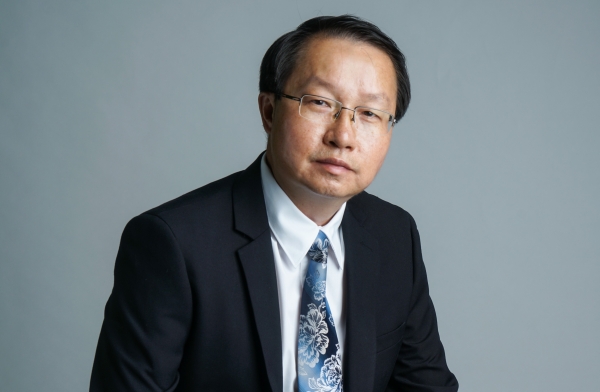
SMU Office of Research Governance & Administration – Sometimes, opportunities come knocking, seemingly out of the blue. Such was the case for Tan Ah Hwee, Lee Kong Chian Professor of Computer Science at Singapore Management University (SMU). The opportunity was an offer to be Dean of the School of Computing and Information Systems (SCIS).
"To be candid, initially I did not volunteer or apply for the position," Professor Tan says. "So it came as a genuine surprise to be considered for this important role. At the same time, I feel deeply honoured by the trust placed in me by the university’s senior leadership and I am truly excited about the opportunities this deanship presents."
Professor Tan, who began his term on July 1, 2026, is only the third Dean of SCIS since it was initially established as the School of Information Systems in 2002.
"In stepping into this role, I see several key imperatives that will shape our trajectory," he says. "First, we must address the issue of recognition, particularly as reflected in our employer reputation and academic reputation scores in the QS World University Rankings. While rankings are not an end in themselves, they do influence our ability to attract outstanding students and secure competitive research funding."
Closely related to recognition is an imperative to deepen collaborations and partnerships.
"We need to foster stronger ties with industry, government agencies and international academic institutions. Such partnerships not only enhance our visibility but also expand opportunities for impactful research and innovation," Professor Tan says.
"[And] there are ongoing priorities that remain critical: recruiting and retaining exceptional faculty, continually refreshing our academic offerings, attracting high-calibre students and strengthening our competitiveness in securing large-scale grants. Together, these imperatives form a comprehensive agenda aimed at ensuring that our institution not only sustains excellence but also advances its global standing."
Best worldwide
"Having served as Associate Dean of Research for the past six years, I am fully aligned with the school’s current direction and priorities," Professor Tan says. "With the majority of our management team continuing in their roles, we benefit from strong continuity and stability. This provides us with a solid foundation on which to build.”
"At the same time, I see this as an opportunity to address areas where we can improve and to chart new directions that will enhance our competitiveness and impact. In other words, we are not simply maintaining the status quo, we are leveraging stability as a platform for growth, innovation and strategic renewal."
One important departure from his predecessor's vision will be an elevation of the school's positioning from a regional focus in Asia to a truly global arena. "As a computing school, we must benchmark ourselves against the best worldwide, not only within Asia," Professor Tan says.
Also, there are several initiatives the new Dean intends to implement.
"First, we will establish a Dean’s Professorship to recognise outstanding faculty, alongside a Visiting Professorship program to attract global talent and foster collaboration. Second, we will sharpen our research profile by creating new research centres that can serve as focal points for innovation and interdisciplinary impact.”
"Third, we should continue to review and enhance our educational offerings at both undergraduate and postgraduate levels, ensuring they remain relevant, forward-looking and aligned with industry and societal needs.”
"Finally, we will raise awareness and strengthen connections with our partners through more systematic outreach – such as newsletters, events and collaborative initiatives. This will deepen engagement with industry, government and academic stakeholders, and reinforce our reputation as a trusted partner in computing and innovation."
Societal benefits
SCIS has an emphasis on producing professionals equipped with real-world skills.
"Looking ahead, I believe this focus must be further strengthened in the era of AI. Our curriculum should ensure that graduates are not only technically proficient but also already capable of applying emerging technologies responsibly and effectively," Professor Tan says.
"Equally important is the balance of hard and soft skills. Beyond technical expertise, our graduates must demonstrate adaptability, problem-solving and communication skills that allow them to thrive in diverse professional environments."
Aside from its reputation for scholarly excellence, SCIS is also known for its innovative research.
"Going forward, I would like to broaden this focus by encouraging larger-scale, team-based research programs, especially those developed in partnership with industry and government agencies. Such collaborations will allow us to tackle complex challenges with greater scale and visibility," Professor Tan says.
"Equally important is fostering translational projects that deliver direct benefits to users and society. My own experience in building collaborations and securing patents gives me a practical understanding of how to translate research into outcomes that resonate with partners."
One of the professor's translational projects relates to assistive technologies for ageing in place – the Sensors In-home for Elderly Wellbeing study, conducted in collaboration with Sengkang General Hospital since 2020.
"This is a longitudinal project involving a large cohort of elderly participants, where consumer-grade, low-cost, in-home sensors are used to track daily activities of the elderly and AI models are developed to obtain digital phenotypes for accurate identification of a condition known as Mild Cognitive Impairment. The project has already produced positive results, published in major conferences and journals," he says.
"My role [in this], as the SMU principal investigator, has been to lead the technical aspect of the project in designing and deployment of non-intrusive in-home sensors and development of AI predictive models."
Models and systems
Professor Tan is known internationally for his academic research, notably for developing biologically inspired neural architectures with high-level cognitive capabilities.
"Biologically inspired neural architectures refer to the methodology I pioneered for development of AI models and systems. High-level cognitive capabilities basically specify the focus of my work on the key cognitive functions of learning, memory, reasoning, explaining and self-awareness. Current leading large language models (LLMs) are largely based on deep layers of neural models which are not explainable and do not carry their memories forward," he says.
"My research has aimed to augment AI systems with memory, explainability and self-aware capability, so that they can learn continuously, recall past experiences and provide reasoning that humans can understand."
While the new Dean hopes to continue with some of his research, particularly in the direction of agentic AI systems, he accepts that his available time for personal research may be limited going forward.
"My priority now is to place the school above my own work, ensuring that our collective agenda thrives," Professor Tan says.
Back to Research@SMU August 2026 Issue
See More News
Want to see more of SMU Research?
Sign up for Research@SMU e-newslettter to know more about our research and research-related events!
If you would like to remove yourself from all our mailing list, please visit https://eservices.smu.edu.sg/internet/DNC/Default.aspx