
By Alvin Lee
SMU Office of Research Governance & Administration – Technology has repeatedly displaced human workers in the name of productivity. However, humans, after a period of flux, adjustment and often some retraining, have adapted and prospered. From automobiles displacing horse cab drivers to the personal computer rendering typists obsolete, human history is replete with examples of disruptive technology. Humans learnt to drive and became taxi drivers, and computer literacy enabled workers to do much more than simply reproduce the written word.
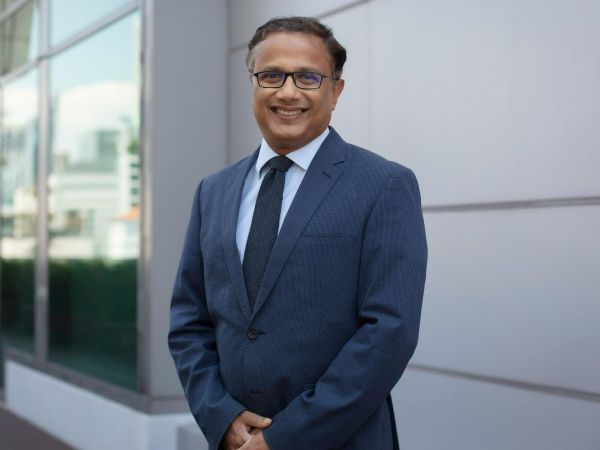
AI, and Generative AI in particular, has accelerated the pace at which digital or computer-based skills become outdated. The World Economic Forum predicts that 39 percent of workers’ existing skill sets will become “transformed or become outdated over the 2025-2030 period.” What is considered a new skill can, and has, become obsolete in five years or less. The upshot of all this, observes Lee Kong Chian Professor of Computer Science Archan Misra, SMU Vice Provost (Research), is the critical importance of developing an effective mechanism for constant learning and relearning.
“Technology will not just disrupt our work; it will reshape how we work. We will repeatedly relearn skills and technologies. For most individuals, it will not be just a couple of times during their working lives, it will be multiple times, maybe even five to 10 times. This is in sharp contrast to prior technological advances, whose slower pace and rate of adoption often meant that only new, younger entrants to the workforce would need to acquire those new skills.”
The three pillars
Professor Misra made those comments at the recent launch of the SMU Resilient Workforces (ResWORK) Institute, which focuses both on redesigning current jobs and workplaces to harness such technological advances, and on dramatically enhancing adult learning capabilities that empower mature workers to adapt to such redesigned workplaces. He said, “Researchers, especially in Singapore, have invested a lot in early childhood education [and] college education, and we've done a great job. But we haven't paid as much attention to teaching 40- to 55-year-olds to learn, retain and transfer skills, all while continuing to hold their day jobs. Such capabilities are vitally important to ensuring that Singapore and the region have the right-skilled human capital to navigate the rapid transformation of work that we are witnessing.”
To achieve the goal of building both successfully transformed organisations and a resilient workforce, the ResWork Institute agenda is defined around three pillars:
Pillar 1 – Optimising Human-Machine Collaboration
Pillar 2 – Transforming Organisations
Pillar 3 – Maximising Societal Human Capital
“For the first pillar, we have two foci areas, both around what I call the human-algorithm-machine nexus,” explained Professor Misra. “One of them will address the question of ‘How can technologies such as robotics and AI be enhanced to enable them to work better and collaboratively with individual workers?’ This requires core advances in computing and human-machine interaction technologies. The other is ‘How can technologies such as AI and Augmented Reality (AR) truly help adult learners, often holding down jobs, to learn better?’. This requires advances not just in computing technologies, but better integration of less-understood psychosocial and cognitive factors within such tools to ensure that such learning is cost-effective and enduring.”
“The second pillar, which is around transforming organisations, is all about reimagining business processes and workflows so that human beings and machines can work together to harness each other’s complementary strengths. However, such workflow and business process redesign isn’t driven purely by technology: there is also an element of adapting to changing work preferences and trends such as remote work and an increasingly longer workspan. We will be taking a holistic look at that, including studying how leadership practices and organisational culture determine how businesses and employees embrace and thrive under digital disruptions.”
He added, “The last pillar focuses very much on the societal level and is meant to inform various relevant aspects of public policy. A large component of the research will be on better understanding the impact that such technologies have on labour markets, both in terms of jobs being affected and the demand for new skills and competencies. The pillar also focuses on uncovering the public policy interventions, economic or social, that can promote an endemic culture of lifelong learning and overcome the various structural barriers to successful reskilling”.
“This pillar includes one additional component, which is about the possibly redefined role of educational institutional and educational providers. We know that lifelong learning consists of on-the-job and what I describe as off-the-job learning [more structured learning, occurring outside daily work tasks]. How do we combine those, and how does the resulting educational ecosystem, consisting of universities, private training organisations and in-house enterprise training units, look like?”
The impact
To galvanise the ResWORK Institute’s ambition of developing evidence-based, societally impactful findings, nine projects helmed by SMU faculty have been initiated, supported by internal seed funding. These nine projects address various thrusts under the three pillars described above, including personalising adult learning content to cater to the distinctive cognitive traits of individual learners (Pillar 1), better understanding how employees in firms can be motivated to embrace digital transformation (Pillar 2), and discovering how flexible work arrangements affect labour market preferences (Pillar 3).
The Institute’s goal is to deliver impact for three strategic stakeholders: public agencies, educational institutions, and businesses. For public agencies, the goal is to “influence human capital development and labour policies to ensure that mature workers in Singapore and [the] region gain the right skills and competencies to continue securing gainful and meaningful work in the face of socio-technical disruptions.” For educational institutions, the focus is on developing the behavioural science-infused technologies that can deliver effective adult education on a scale and in a cost-effective manner.
For businesses, Professor Misra emphasised that the aim was to demonstrate how new technologies could be used to improve productivity, but with the human very much in mind. “We need to figure out the right combination that improves productivity while simultaneously valorising human agency, skills retention and satisfaction. This agenda is really an invitation to organisations to partner us to design and experimentally validate the best practices that can assure long-term organisational success in jointly harnessing human, machine and algorithmic capital.”
“Such partner organisations may include technology companies that are building AI or information systems tools, and who may benefit from working with us to optimise or adapt such tools for specific business needs. However, there is a much larger group of what I call technology user organisations, who are figuring out, for example, how to integrate AI into the workflow. For such organisations, ResWORK’s ability to integrate capabilities across organisational design, corporate strategy and organisational behaviour become important.
Back to Research@SMU February 2026 Issue
See More News


Want to see more of SMU Research?
Sign up for Research@SMU e-newslettter to know more about our research and research-related events!
If you would like to remove yourself from all our mailing list, please visit https://eservices.smu.edu.sg/internet/DNC/Default.aspx