

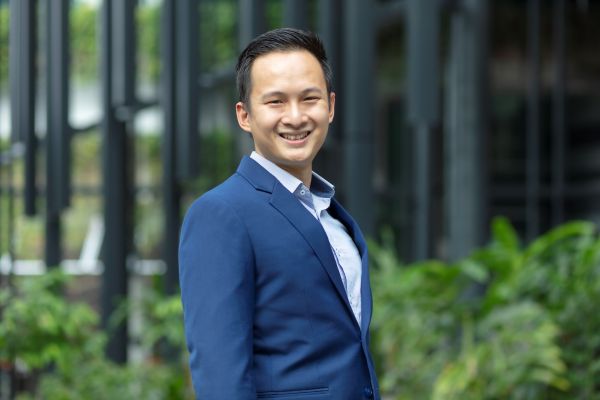
By Christie Loh
SMU Office of Research Governance & Administration – Held back by fear of social stigma, a striking four in five Singaporeans who qualify for public aid do not step forward for help from the government, according to an award-winning study by a political scientist from Singapore Management University (SMU).
The investigation by SMU Assistant Professor of Political Science (Education) Nathan Peng marks the first published attempt at calculating the take-up rate of state welfare among the most financially needy of Singaporean society.
His study makes use of data from Singapore Life Panel (SLP), a nationally representative panel survey of Singaporeans and Permanent Residents aged 50 to 70, whose economic, physical, mental and social well-being are tracked over time. Formed in 2015, SLP is managed by SMU’s Centre for Research on Successful Ageing (ROSA). SLP’s sample size was large enough for Professor Peng to capture the small segment meeting the stringent criteria for the ComCare Long Term Assistance Scheme, which targets Singaporeans who are unable to meet basic living expenses and are unlikely to leave that category due to reasons such as retirement or disability.
When Professor Peng started his project in 2021, ROSA’s pool of active respondents was around 8,000, he said. After eliminating respondents who did not qualify for ComCare assistance, the sample size shrank to about 300. From this pool, Professor Peng found that there were 4.5 times as many respondents who did not tap on the scheme compared to those who did. These numbers were comparable to that of various developed nations such as Sweden and Switzerland.
That suggests that some 18,000 qualifying needy households potentially leave themselves out in the cold, given that there were 4,078 unique households served by the ComCare Long Term Assistance Scheme in the 2020 financial year, he estimated.
Winner of 2025 EASP Early Career Scholar Award
Professor Peng detailed his analysis in a research paper titled “Lingering Detachments: How Socialization of Narratives Past Still Affect Social Policy Success Today”, which received the 2025 East Asian Social Policy (EASP) Early Career Scholar Award. The recognition came just a year after he joined SMU’s full-time faculty in 2024.
Prior to entering academia, Professor Peng spent five years in civil service; it was his last stint at the Ministry of Social and Family Development studying poverty, inequality and the ComCare policies, which ignited his interest in delving into the take-up rate of state welfare.
“Back then, the word on the ground was that a lot of the elderly were not coming forward and that the older generations were much more averse to taking up assistance than the younger generations,” he told SMU’s Office of Research Governance and Administration (ORGA) in an interview. The gut feel took on tangible shape once Professor Peng completed his SMU-sponsored PhD and entered academia with the methodological know-how to seek answers.
EASP said his research paper “stands out as a “sophisticated, single-authored contribution”. It added: “This highly original paper establishes a creative link between historical narrative socialisation and contemporary welfare non-take-up, highlighting an important and subtle cultural-psychological dimension.”
Professor Peng plans to submit his paper to an academic journal for publication this year.
Pride and prejudice
Professor Peng conducted two quantitative tests on the SLP data and found that fear of judgment from friends and family consistently increased the likelihood of respondents denying themselves public aid.
Much of this fear arose during post-Independence Singapore, where the government applied rigorous means testing on aid applicants and stressed self-reliance even for those pushed into destitution by reasons beyond their control. Against a backdrop of an economic boom enjoyed by many Singaporeans in the 1980s and 1990s, there was “little room for empathising with the plight of assistance recipients; hampering society’s ability to attribute assistance recipients’ circumstances to structural rather than individual failings”, wrote Professor Peng.
In the 2010s, he said, the government took major steps to de-stigmatise aid recipients, made take-up more accessible and “the application process more dignified”. However, we still saw from the results that many elderly who likely qualify are still not coming forward despite a “much kinder” national narrative surrounding social assistance, he said.
“The Singaporean case suggests that an atmosphere in which public support is restrictive and associated with stigma has a durable effect on attitudes and behaviours,” he wrote.
His remedy? “A social network solution for a social network problem”: Create ‘ambassadors’ out of folks, such as coffeeshop ‘aunties’, who regularly interact with the low-income, and train them on skills such as how to recognise malnutrition or signs that a person’s basic needs are not being met, and how to encourage such a person to seek social assistance.
Educating today’s youth is also on Professor Peng’s radar. In collaboration with the Lien Centre for Social Innovation, students in his new class, Social Science Practicum, will be sent out to rental flats to interview residents on their aspirations and the issues facing them, as a way of learning about social mobility.
‘In Singapore, sometimes I hear this: ‘The poor people are poor because they made bad decisions, why should we help them?’” he said. “The hope is that this class will build the students’ empathy and inform their political perspectives and narratives.”
Back to Research@SMU February 2026 Issue
See More News
Want to see more of SMU Research?
Sign up for Research@SMU e-newslettter to know more about our research and research-related events!
If you would like to remove yourself from all our mailing list, please visit https://eservices.smu.edu.sg/internet/DNC/Default.aspx