
By Alvin Lee
SMU Office of Research Governance & Administration – The impact of an ageing population has occupied the attention of governments worldwide. The UK’s Office for Budget Responsibility noted research that said “the fiscal position is unsustainable if future generations are left to make a larger net contribution to the government’s finances than today’s generation.” In Japan, the concerns surround high per-capita medical spending among the elderly – Japan’s average hospital stay is more than three times the OECD average. In Singapore, long-term care for the elderly had nearly doubled from S$1.7 billion (2020) to S$3 billion (2025) in five years.
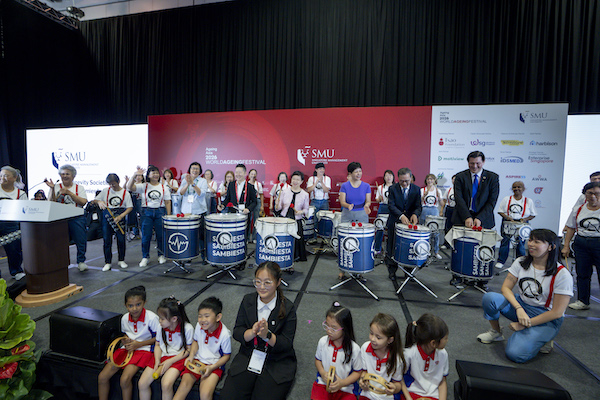
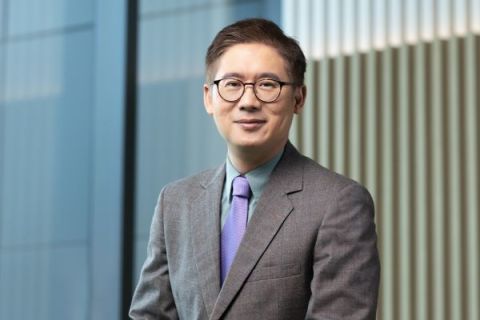
Issues of individual and governmental healthcare spending, along with the elderly’s retirement savings or lack thereof, often dominate policy discussions and media headlines. That approach often overlooks the associated concerns of ageing beyond the economics of healthcare, explains Dr. Cheong Wei Yang, Interim Co-Director of the newly launched Longevity Societies & Economies Institute (LSEI).
“Our response to longevity in cities will shape the core of how Asian economies will thrive, or not: labour supply, productivity, public spending, and long‑term fiscal sustainability,” he says. “If we continue to treat ageing mainly separately either as a healthcare, or retirement savings, or social issue only, we will miss the bigger picture. Longevity is a structural economic and societal shift that requires us to rethink integratively – how we design work, markets, and public systems.”
PILLAR 1: Building Longevity Economies
The LSEI will work with a wide range of local and international partners to research on the issues of ageing identified under two interconnected pillars: Building Longevity Economies (Pillar 1) and Cultivating Holistic Well-Being (Pillar 2).
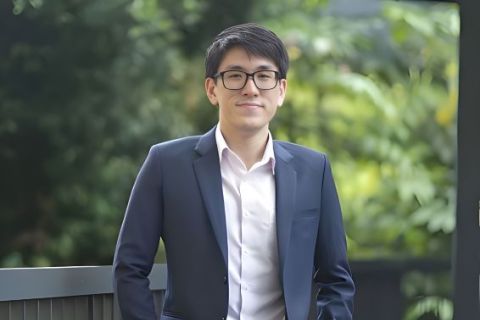
For Pillar 1, led by SMU Associate Professor of Economics Kim Seonghoon, the focus is:
“To mitigate the potentially negative economic impacts of ageing societies by transforming ageing into an economic asset and harness opportunities afforded by an ageing population for a successful transition to an economically sustainable society.”
A main plank of Pillar 1, which also includes exploring opportunities from the Silver Economy and understanding and mitigating costs implications and innovating on the management of services and products that cater to seniors, is perhaps best represented by the books The 100-Year Life and The Longevity Imperative written by Professor Andrew Scott from the London Business School and now at Ellison Institute of Technology at Oxford. Professor Scott highlighted the changing reality of retirement, where it is no longer financially sustainable to retire at age 65 given the longer lifespans if we expect to live for 100 years, as it implies that one would spend a third of our lives in retirement. Forward planning by individuals, governments, and businesses are required to address issues of career flexibility, insurance coverage, and lifelong learning.
Professor Scott is one of many academics whom LSEI has approached to deepen LSEI’s insights into “[m]acroeconomic impact of reactivating retired workers; innovations in retirement and flexible employment; structural shifts in care arrangements and resultant economic impact.”
“If we now live potentially up to 100 years, maybe we need a four-period overlapping generations model – fundamentally different savings and consumption behaviours, and completely different general equilibrium solutions,” observes Dr. Cheong, who previously researched on a heretofore conventional 75-year, three-period model. “It will affect how jobs are structured, how skills are renewed over time, how retirement is financed, and how people participate economically across longer life spans.”
“The biggest opportunities are in redesigning work, financial planning, and well-being services so that the gift of longer lives translates into productivity, resilience, and sustainability – rather than the current fears around dependency and bankrupt systems.”
PILLAR 2: Cultivating Holistic Well-Being
Pillar 2 will be led by LSEI Interim Co-Director Professor Paulin Straughan, who is also the Director of the decade-old Centre for Research on Successful Ageing (ROSA), which was previously known as the Centre for Research on the Economics of Ageing (CREA). The key focus of Pillar 2 is:
“To foster successful ageing by adopting a Life Course Approach that integrates physical, mental, social, and financial well-being, thereby supporting holistic and synergistic strategies and practices across individual, community, and society levels.”
But what is a ‘Life Course Approach’?
“A life-course approach reminds us that successful ageing doesn’t begin at 65,” says Professor Straughan. “Who we are later in life is shaped by the choices, opportunities, and experiences we accumulate over time.”
“It highlights the importance of starting early – when we have the capacity to build our health, wealth, and social capital. Financial security is often built earlier in life, just as good health depends on habits formed when we’re younger.”
She adds: “And just as importantly, social well-being requires intentional effort – nurturing relationships that can become strong support networks over time. So successful ageing isn’t just an outcome of old age – it’s the result of sustained, thoughtful investment across the life course.”
With ROSA’s rich longitudinal data, Professor Straughan aims to connect “industry, community organisations, and policymakers with rigorous academic research” to develop solutions that deliver real-world impact. Creating financial tools that are understandable and accessible for the elderly is key, especially given the technological barrier that often hinders and intimidates those who are less tech-savvy. The goal is to deliver lifestyle intervention that creates social connectivity and participation, and should dementia eventually take place despite efforts at prevention, “dementia-friendly physical and digital environments [are created] to sustain cognitive vitality.”
The impact
ROSA’s recent award of a renewed five-year MOE Tier 3 grant has provided the ideal platform for LSEI, observes Dr. Cheong. “ROSA has given us an unusually detailed understanding of the social determinants of Singapore’s seniors’ economic, social, and behavioural outcomes, and how these can evolve over time, including for example over a pandemic like Covid.
“It has also given us a holistic basket of well-being indicators – physical, mental, social and financial – that have been well-characterised statistically because of a decade-long time series.”
Dr. Cheong articulates the goal of establishing SMU and LSEI as international thought leaders on the future of longevity societies and economies, as well as creating knowledge and real-world products and services via partners in industry, government, and civic society organisations.
“And finally, impact is regional. By positioning SMU and Singapore as a regional reference point, LSEI aims to contribute evidence and models that other Asian cities can adapt as they face up to similar longevity transitions too,” Dr. Cheong says.
Back to Research@SMU May 2026 Issue
See More News
Want to see more of SMU Research?
Sign up for Research@SMU e-newslettter to know more about our research and research-related events!
If you would like to remove yourself from all our mailing list, please visit https://eservices.smu.edu.sg/internet/DNC/Default.aspx