

By Alvin Lee
SMU Office of Research Governance & Administration – OpenAI’s ChatGPT gained one million users within the first five days of its launch at the end of 2022, and by January the following year, it had about one hundred million active users. After nearly five years of living with what is now widely known as Generative AI (GenAI), millions of people around the world have incorporated software such as ChatGPT, HeyGen (‘Lifelike Avatars’), and Jogg AI (e-commerce marketing) into their daily routines.
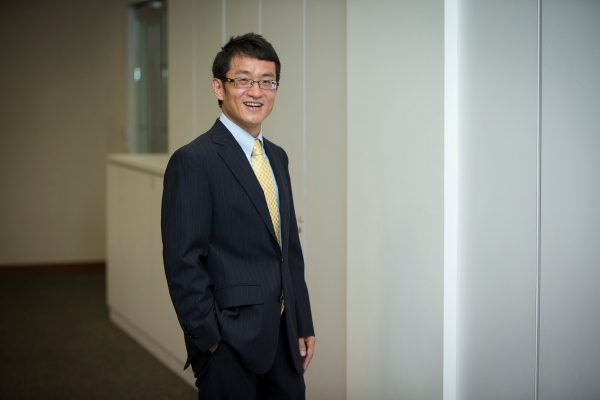
But what about professional fund managers and traders at financial institutions? Do they use ChatGPT to trade? In a paper that was published in the Journal of Accounting and Economics, Professor Cheng Qiang, Lee Kong Chian Chair Professor of Accounting at SMU, found that they do – between February 2023 to August 2023, trading volume on the New York Stock Exchange (NYSE) dropped roughly six percent relative to average trading volume during eight major ChatGPT outages.
Professor Cheng’s paper, titled “Does generative AI facilitate investor trading? Early evidence from ChatGPT outages”, was co-authored by SMU Assistant Professor of Accounting Lin Pengkai and then-SMU doctoral candidate Zhao Yue, who recently joined City University of Hong Kong as an Assistant Professor in Accounting. Besides finding that professional investors do indeed use ChatGPT, it also answered the research question that Professor Cheng was more interested in: Does ChatGPT use lead to better price informativeness, i.e., stock prices better reflecting a firm’s fundamentals?
“We did find that the use of ChatGPT improved market efficiency… purely because AI can go through more information more quickly,” said Professor Cheng, noting that humans would take a much longer time than AI to go through financial statements that could span over a hundred pages. “You could probably pick a few key things to read and then you have to start trading because traders are competing with each other.”
“When people use AI such as ChatGPT to process the information, they can quickly understand the main message and start to trade. That way, the information that is buried in financial statements will be reflected quickly [in the stock price], but that is based on a relatively small number of people using ChatGPT to trade. Once everybody starts to use ChatGPT, whether it still improves market efficiency is another question.”
The impact on the stock m(AI)rket?
Professor Cheng observes that if the vast majority of stock market participants were to use a single AI tool to process market signals and information, and then trade on that tool’s recommendations, there would “only be one voice in the market”. If the AI tool had been working off poor or false information, then the entire market would go off in a direction that would not reflect economic fundamentals.
As such, those who put in the effort to study the market instead of relying on AI would benefit in such a scenario, right? “They will benefit if they can crack the market,” observes Professor Cheng. “But if 98 percent of the market is going in one direction, and you have the remaining two percent shouting, ‘That's the wrong direction!’ the wider market might not stop to listen. It is something that regulators are worried about.”
Professor Cheng also points out that the big financial institutions that drive the market usually employ a range of tools, e.g., Claude, Gemini, ChatGPT etc., which renders the fear of a market shutdown due to the outage of a single AI tool “unwarranted because competing tools are available.” He adds: “Whether you have Claude or ChatGPT or Gemini, it’s still a large language model, so they make predictions based on what they have learnt, which can still lead people down the wrong path. Institutional investors should be aware of this limitation.”
There is also the worry that the data on which the AI tool is trained is biased, such as mega caps being rated favourably vis-a-vis smaller firms with superior performance because of information availability. Professor Cheng opines that governments can make a big impact by “evaluat[ing] the limitations of the tools… instead of every financial institution doing the same work, because all that repetition is costly from the social perspective.” He explains that third-party researchers and academics can contribute to society by documenting the relevant issues and publishing the findings in the public domain.
Impact on research and education
Professor Cheng’s interest in AI reflects his interest in technology – he had published in 2024 a paper on the economic value of blockchain applications. He is also heavily cited for his ESG research, which contributed to his 1,700+ Google Scholar citations in 2025 alone. For his academic impact, the former Dean of the School of Accountancy was named on Stanford University’s “World’s Top 2% Scientists” list, ranking 60th out of 6760 researchers in Accounting.
Why did his work strike a chord with academic colleagues around the world? Is it because AI and ESG are especially relevant to the challenges humankind face in the 21st century?
“Most academic papers are usually read by people who are already interested in that line of research, so those papers won't have a lot of impact outside that community,” says Professor Cheng, who advises young academics to look at topics that people outside academia would be interested in. “I pay attention to ESG issues and AI because everybody’s welfare is affected by environmental and AI issues. We can't get away from AI, and we can see that a lot of a market movement is driven by, for example, memory chips and data centres.”
As a former Dean, what does he think of AI in education?
“I think our education institutions are in a very interesting position. On one hand, we don't want our students to use AI too much because we want to train them to understand the material and have the necessary critical thinking skills,” he says. “But at the same time, once the students graduate, they are going to use AI. If we don't embrace AI tools, our students will be in a disadvantageous position.
“I reflect on how we learn math. We have calculators but we still teach elementary school students math. The idea is to understand the knowledge and then use the tool to improve efficiency. But if we don't understand the logic behind math, we might not realise it when AI has made a mistake because we've completely relied on it. From that perspective, I think we do need to teach the students the fundamentals, but at the same time encourage them to explore and use AI.”
Back to Research@SMU August 2026 Issue
See More News
Want to see more of SMU Research?
Sign up for Research@SMU e-newslettter to know more about our research and research-related events!
If you would like to remove yourself from all our mailing list, please visit https://eservices.smu.edu.sg/internet/DNC/Default.aspx