

By Christie Loh
SMU Office of Research Governance & Administration – One of Singapore Management University’s (SMU) leading computer scientists has secured multi-million-dollar funding to build a new generation of intelligent decision support methods and software tools that will strengthen the country’s agility in resource allocation during national crises including a pandemic.
The five-year project, titled Human-Centered Operational Pandemic Resilience (HOPE), is funded under the Ministry of Education’s Academic Research Fund (AcRF) Tier 3 Programme. Tier 3 grants are the highest and most competitive tier of academic research funding in Singapore, awarded to high-impact interdisciplinary programmes that are overall led by a university researcher with outstanding credentials.
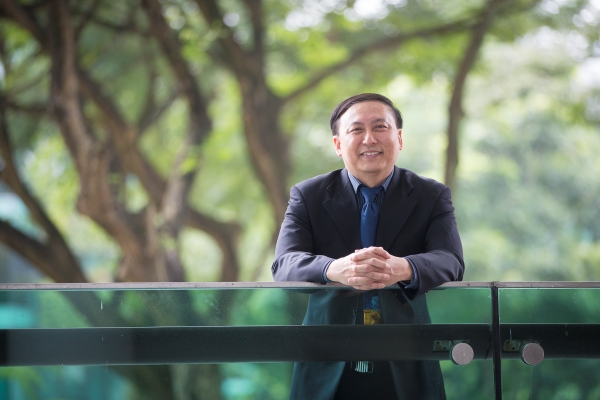
HOPE’s Lead Principal Investigator (PI) is SMU Professor of Computer Science Lau Hoong Chuin, whose successful collaborations with industry giants such as IBM and Fujitsu have yielded solid results in terms of business cost savings and technological innovations.
He is attempting to create something unprecedented with HOPE.
In the aftermath of the COVID-19 pandemic, countries have started beefing up their strategies to cope with sudden major crises. But while most national programmes focus on single goals such as diversifying supply chains or healthcare interventions, this SMU project is gunning for a “holistic” resilience system built around three pillars: Enhancing supply chain resilience, optimising healthcare operations, and strengthening emergency response coordination.
“It’s an ambitious attempt,” Professor Lau readily acknowledged in an interview with SMU’s Office of Research Governance & Administration (ORGA).
However, “because Singapore is small, and we have strong coordination between government agencies, healthcare institutions, industry and the research communities, this programme is uniquely positioned to showcase a truly integrated approach to resilience in the face of uncertainty”.
AI + OR + Human in the Centre
A distinguishing feature of HOPE is its integration of Artificial Intelligence and Operations Research – two disciplines that are often pursued separately.
AI excels at learning patterns from large volumes of data and generating predictions, while OR provides mathematical frameworks for planning, optimisation, and resource allocation. By combining the strengths of both fields, the team hopes to create systems that are not only intelligent, but also transparent, reliable, and operationally actionable.
“We’re bringing the two disciplines together deeply; and ultimately our goal is to solve real-world problems that matter,” said Professor Lau.
At the heart of the programme is a commitment to “human-centered” decision making, balancing societal needs and economic efficiency. For instance, when allocating essentials such as food supplies and medical equipment during a crisis, the software tools would be used to estimate how these scarce resources should be distributed to various communities in a fair, equitable manner. The same suite of tools would also be used to manage workforce planning issues in healthcare operations, such as rostering of nurses to ensure they receive adequate rest while maintaining quality patient care, as well as decisions on balancing urgent and elective surgeries.
HOPE will collaborate with government agencies and industry partners, including Singapore’s Programme for Research in Epidemic Preparedness and REsponse (PREPARE), A*STAR’s Institute of Advanced Intelligence and Computing, Ministry of Health, Ministry of Home Affairs, and Singapore General Hospital.
The tools created now in ‘peacetime’ will certainly have uses. One project that is ready for use at present is related to predicting and acting on a surge in dengue fever cases, said Professor Lau.
When crisis or ‘wartime’ strikes, the system built by his team should help stakeholders such as healthcare institutions effectively pivot. In today’s world fraught with uncertainty, we need to create tools to smoothen the transition from peacetime to wartime rather than improvising in the midst of an emergency. “That’s why I named the programme “HOPE”: there is HOPE during crisis,” Professor Lau said.
“HOPE will serve as a university-wide platform, bringing together researchers from across the university to address complex societal challenges through AI, data science, optimisation, social science, public policy, and other complementary disciplines,” said Professor Lau.
He added: “We are not simply building a five-year research programme. Our aspiration is to create a lasting area of excellence that advances human-centered AI, and serves as a trusted partner for government, industry and healthcare organisations.”
“If we are successful, HOPE will become a catalyst for new collaborations and innovations and to thrive in the long term,” said Professor Lau. “The hope is to develop technologies and capabilities that deliver tangible impact, and not just add a few more papers to the literature.”
Back to Research@SMU August 2026 Issue
See More News
Want to see more of SMU Research?
Sign up for Research@SMU e-newslettter to know more about our research and research-related events!
If you would like to remove yourself from all our mailing list, please visit https://eservices.smu.edu.sg/internet/DNC/Default.aspx