

By Alistair Jones
SMU Office of Research Governance & Administration – The use of artificial intelligence (AI) tools as teaching aids in higher education is of growing interest and practice. One promising target for AI-enhanced learning is computer programming students, where their progress may be aided and informed by harnessing the power of large language models (LLMs).
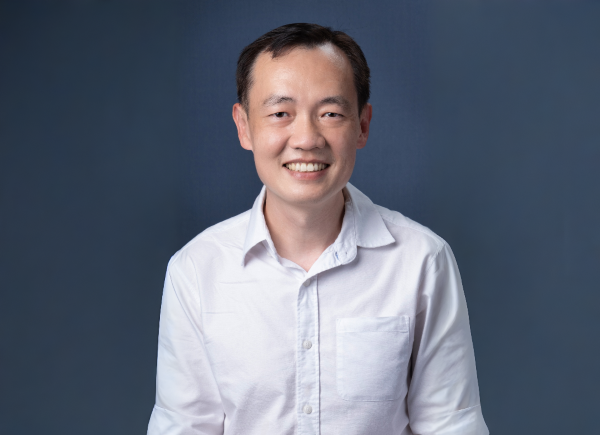
Enter PerFormRect – an abbreviation of Personalised Formative Rectification – which is a proof-of-concept research project being led by Fwa Hua Leong, a Senior Lecturer of Information Systems at Singapore Management University (SMU).
"PerFormRect is a system that aims to detect students’ misconceptions and utilise these insights in a feedback loop to craft personalised formative assessment questions for programming education, leveraging LLMs," Dr Fwa says.
Funded by a grant from Singapore's Ministry of Education (MOE) Tertiary Education Research Fund (TRF), Dr Fwa and his team intend to improve the learning experience of computer science students by utilising the technology of Open AI GPT models.
"We chose OpenAI GPT models because we have done some evaluation previously and found [that they] give better results as compared to the others."
But what must surely be an issue is that all generative AI models have been known to sometimes 'hallucinate' and confidently generate false or misleading information.
"We will mitigate this by having humans in the loop during the evaluation phase to both identify misconceptions from students’ code submissions and review the generated exercises for adequacy," Dr Fwa says.
"And within the design of our LLM agent, we will also incorporate a critic or reviewer agent where a different model will check on the output from the creation stage to reduce the probability of falsified information."
Pressing need
So, what benefits could PerFormRect bring to computer education?
"In programming courses, instructors traditionally invest significant time and effort in both manually reviewing students’ programming codes for misconceptions and creating formative assessments that address the common misconceptions," Dr Fwa says.
"This challenge hinders instructors’ ability to address individual students’ needs and delays students’ learning progress, as they are often unaware of their own misconceptions.
"Therefore, there is a pressing need to efficiently identify coding misconceptions and provide timely, personalised questions for both practice and self-assessment – tasks that are difficult for human instructors to perform at scale."
Dr Fwa notes that an emerging trend in programming is the use of vibe coding where a developer or student describes a task as a prompt to an LLM which then generates the source code automatically. Could this replace manual coders?
"While [vibe coding] lowers the barrier to building software, studies have shown that students do not understand the generated codes, which erodes fundamental programming skills and core software engineering principles," Dr Fwa says.
"PerformRect, on the other hand, focuses on uncovering what students do not understand about their submitted codes and then addresses the conceptual gaps with the generation of targeted questions."
As AI systems rapidly develop, is there a limit to how automated computer science teaching could become?
"Vibe coding already shows how automated software development can be. It has led to some questioning whether computer programming is dead. The consensus among industry professionals is, however, that traditional software development is evolving and not dying," Dr Fwa says.
"Vibe coding makes writing boilerplate code obsolete, but it makes software engineering (design, architecture, security and debugging) more critical than ever, shifting the focus from code production to system oversight.
"The irony of vibe coding is that it makes understanding more valuable, not less. Those who invest in understanding software engineering fundamentals will not be replaced; they will be the ones who know how to use them wisely. Thus, there is a limit to how automated computer science teaching can become."
Widespread adoption
Universities have only recently moved from trying to prohibit the use of ChatGPT to integrating it, and similar AI tools, into research, administration and course work. What has prompted this turnaround?
"The use of LLMs for coursework, research and administration is driven by practicality, pedagogical benefits and industry’s widespread adoption of it, " Dr Fwa says. "Rather than viewing LLMs as a threat to education, more institutions are of the view that this is an opportunity to transform education. For example, to redesign assessments around authentic, higher-order thinking skills.
"Externally, AI and LLMs have become embedded into the processes of many industries. Universities realised that they can no longer justify producing graduates with little or no experience in the use of tools highly valued by their employers."
"In addition, there are currently no reliable means of detecting whether an assessment was completed with the use of LLMs. As such, prohibiting the use of ChatGPT or other LLMs would not be feasible as we cannot reliably enforce it anyway."
As automated systems such as PerFormRect are implemented, how will the role of human instructors change?
"PerformRect will augment the instructors in personalising the learning of our students. The instructors' role will shift from executors to architects of the assessment framework," Dr Fwa says. "For example, instructors [will be able to] focus on refining the misconception taxonomy based on the patterns surfaced by the system, designing new question bank entries to address gaps, and mentoring at-risk students (who may still have conceptual confusions)."
Affective tutoring
Are there potential pitfalls and dangers as more tasks are performed by AI systems?
"One potential pitfall is an over-reliance which leads to cognitive offloading by humans. Humans stop critically evaluating AI outputs and exhibit diminished capacity for independent decision-making and critical thinking," Dr Fwa says.
"Ethical issues are another area of concern. Data privacy, algorithmic bias and inequality can be exacerbated with the use of AI."
And how does the PerFormRect project build on Dr Fwa's earlier work?
"My previous research work focuses on design and evaluation of affective tutoring systems in computer science education. This established a foundational knowledge of how intelligent tutoring systems, which not only respond to what students know but to how they feel while learning, can be designed," he says.
"The common elements with this project include the use of AI technologies for personalisation of learning and timely intervention in the students’ learning process. PerFormRect thus is an extension of the use of AI, specifically LLMs, to achieve responsive, personalised, intelligent tutoring from affective domain into the cognitive domain for computer science education."
Back to Research@SMU May 2026 Issue
See More News


Want to see more of SMU Research?
Sign up for Research@SMU e-newslettter to know more about our research and research-related events!
If you would like to remove yourself from all our mailing list, please visit https://eservices.smu.edu.sg/internet/DNC/Default.aspx