


By Christie Loh
SMU Office of Research Governance & Administration – What is a teacher to do, faced with batch after batch of student assignments littered with inaccuracies and misconceptions that seem to have been blindly lifted from Artificial Intelligence (AI)? Ban the use of AI? Accept the inevitable?
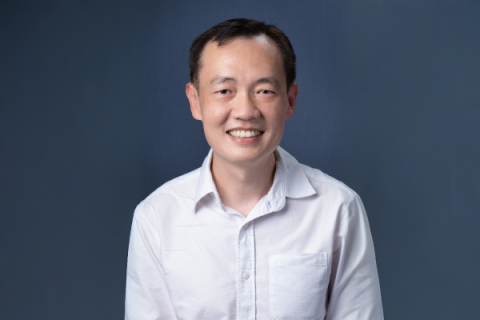
Or there is the strategy of Dr Lo Siaw Ling, Associate Professor of Information Systems (Education) at Singapore Management University (SMU): Sharpen her tools to sharpen her students’ minds.
Armed with a three-year grant from the Ministry of Education (MOE) Tertiary Education Research Fund (TRF), Professor Lo is designing a new pedagogical approach that includes an agentic AI application, to tackle the rising problem of students relying on Large Language Models (LLM), such as the wildly-popular ChatGPT, and regurgitating generated information that is vague, out-of-context or outright incorrect in their schoolwork.
“What I notice is, students use LLMs without much context, without thinking further. They ask it for the sake of asking and whatever comes out, they take it as is. I find that a bit risky,” Professor Lo, the research project’s Principal Investigator (PI), told the Office of Research Governance and Administration (ORGA) in an interview.
She believes in highlighting those incorrect concepts in class and getting her students to analyse what is wrong, thereby deepening their understanding. Psychologists call this “cognitive conflict”, which studies have shown to be effective in getting students to actively re-organise their thinking instead of being passive learners. And this is the teaching philosophy behind Professor Lo’s research project titled “Debunkr – Debunk to Deepen: An AI-enhanced Pedagogical Approach for Transforming Misconceptions into Deeper Understanding”.
How Debunkr is envisioned to pan out in the classroom
First, the instructor will use the Debunkr application to prepare a pre-lesson exercise, which may be in the form of multiple-choice questions (MCQs) or a poll of misconception statements, to assess the students’ understanding of the course topic. Next, these responses will be analysed before being used in class for group discussion.
“I want to provide the students with context, to understand that certain statements are not exactly wrong, it’s about knowing in what situation they are right or wrong,” said Professor Lo. “Usually, we’ll be able to surface all this through class discussion. But if we’re not able to, then I will guide them to come to a conclusion together. That’s why the role of an instructor is still very important in this area.”
She stressed that Debunkr in no way seeks to replace educators. In fact, it is meant to aid the teacher. For one, using generative AI to sieve out students’ misconceptions in a topic will save the teacher much time and effort especially for large class cohorts.
In addition, the agentic AI application that the research team is developing would be trained to evaluate the quality of assessments crafted by the generative AI, to ensure they are aligned with the teaching content and that the MCQs are usable. (Generative AI excels in content creation when prompted by user input, whereas agentic AI is used to solve problems with minimal human input, by analysing real-time data and making adjustments accordingly.)
Debunkr trials on real-life SMU courses
The pilot implementation of Debunkr will involve around 240 SMU students from two undergraduate courses and one post-graduate course. Two classes within each course will undergo a “within-subjects experiment”, whereby Class A will receive the traditional instructional method for Topic 1, followed by the Debunkr method for Topic 2, while Class B experiences the reverse for each Topic.
All data collected – from pre-lesson assessments to post-lesson student reflections – will serve as metrics for Debunkr and to assess if the novel pedagogical approach does enhance students’ critical thinking abilities. Based on some preliminary experiments conducted in 2024, Professor Lo believes that learning through misconceptions will give students “a sense of achievement and intellectual curiosity” and “nurture intrinsic motivation”.
She is keen to explore if Debunkr will work well for a variety of subjects such as History, and not just for Science, Technology, Engineering and Mathematics disciplines. Thus far, studies on the benefits of engaging students in cognitive conflict-inducing activities have primarily focused on core high school science subjects such as physics and mathematics, said Professor Lo. Her project would shed much-needed light on this area of research concerning university courses.
“In university education, you’re no longer just learning facts, you’re now training your mind to think. If you’re not able to think from various perspectives, I think it will be quite worrying,” she said.
Two of her Co-PIs are also senior academics at SMU’s School of Computing and Information Systems: Associate Professor of Computer Science (Education) Ouh Eng Lieh, and Associate Professor of Information Systems (Practice) Tan Kar Way. A third Co-PI is prominent AI expert Erik Cambria, Professor of AI at Nanyang Technological University and founder of several AI companies.
Back to Research@SMU May 2026 Issue
See More News

Want to see more of SMU Research?
Sign up for Research@SMU e-newslettter to know more about our research and research-related events!
If you would like to remove yourself from all our mailing list, please visit https://eservices.smu.edu.sg/internet/DNC/Default.aspx