

By Christie Loh
SMU Office of Research Governance & Administration – Advancing its contribution to research on the socio-technical realities of artificial intelligence (AI) in the region, Singapore Management University (SMU) has won a government grant to conduct an extensive study on Inclusive AI in six cities in Southeast Asia.
The research project titled “Inclusive AI Governance in Southeast Asian Cities” is receiving funding for four years from Singapore’s Ministry of Education (MOE) 2025 Special Programmatic Grant. The one-off grant is “designed to encourage the development of ambitious Social Science and Humanities Research programmes, with an emphasis on developing longer-term capabilities in areas germane to establishing Singapore as a thought leader”, MOE said in its Request for Proposal document.
SMU, amid the buzz around all things AI, has zoomed in on an area that has yet to receive sufficient attention: Empirical research on how AI systems are designed, implemented and experienced in everyday life – including the extent to which the system is ethical and fair across the board – in Southeast Asia, a region of great diversity.
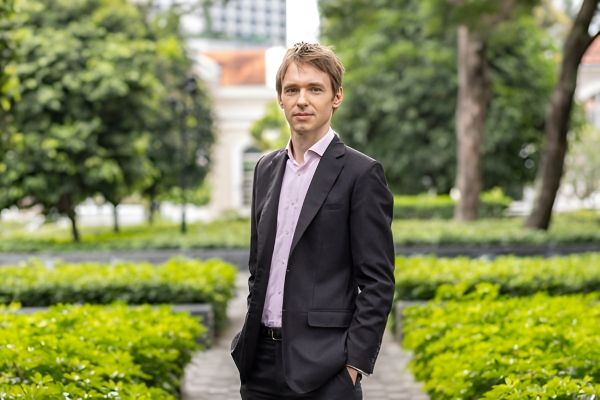
“Yes, it’s a big challenge,” said the project’s Lead Principal Investigator (PI), Professor of Geography Orlando Woods, who is also Associate Dean at SMU’s College of Integrative Studies and Director of the SMU Urban Institute.
“If we can pull this off, it would be an important piece of work.”
He and his team of six Co-PIs are counting on several factors to work in their favour, one of which is SMU’s regional connections.
The six Co-PIs, who will each take charge of themes such as policy, education, healthcare, and urban planning, are:
* Dr Jason Grant Allen, SMU Associate Professor of Law;
* Dr Terry van Gevelt, SMU Associate Professor of Urban Sustainability;
* Dr Yasmin Ortiga, SMU Associate Professor of Sociology;
* Dr Diganta Das, NTU Associate Professor of Human Geography;
* Dr Naomi Hanakata, NUS Assistant Professor of Urban Design; and
* Dr Araz Taeihagh, NUS Associate Professor of Public Policy
Opening doors to the city
The six cities, including home-base Singapore, were selected for the study due to their varying levels of AI readiness and urbanisation. But it is their place in SMU’s network that will smoothen the path for the project’s fieldwork. Since 2022, the university has opened Overseas Centres, which function like embassies for SMU, in Bangkok, Thailand; Jakarta, Indonesia; and Ho Chi Minh City, Vietnam. It also has international advisory councils established in those three countries and in Kuala Lumpur, Malaysia; and Manila, Philippines.
“Having worked with them on previous projects, they are excellent in terms of opening doors,” Professor Woods told SMU’s Office of Research Governance and Administration (ORGA) in an interview, explaining that the network had provided access to various stakeholders and local field assistants for his recent research on smart city development in the region.
This project, which is the largest he has undertaken to date in terms of scope and funding size, is expected to be far-reaching and will involve a mixed-methods approach. Targeted surveys of up to 3,000 responses will be conducted in each city to identify patterns and residents’ concerns and perceptions of fairness. Also planned are some 1,320 in-depth interviews across the six cities with various stakeholders including policymakers, technology providers, civil society groups and local community members.
Ethnography is a core component of the project. The research team will employ ethnographic observation to contextualise interviewees’ accounts and examine how inclusion is enacted in situ, said Professor Woods. In addition, there will be ethnographic ‘system tracing’ of two to three publicly deployed AI systems per city, whereby the research team follows a system’s ‘social life’ from policy conception and procurement to on-the-ground use.
“We approach AI inclusion as a socio-technical issue: rooted not only in technological design, but also in the institutions, policies, and everyday practices through which they are embedded and used,” the research team said in its proposal.
Research with real-world impact
The project is expected to yield three tangible outcomes:
* A Taxonomy of Urban AI Systems, which will classify how AI systems and governance configurations co-evolve across different urban sectors;
* An analytical Framework for Inclusive AI Governance, which will trace how inclusion is negotiated across institutional and policy scales; and
* A Handbook of Inclusive AI Governance, which will contain comparative case studies and actionable guidance for policymakers and practitioners.
“A lot of the more humanities-rooted projects tend to focus on the academic or theoretical question about Inclusion, whereas our project is meant to be very translatable in terms of co-opting the relevant stakeholders,” said Professor Woods. There will be upfront workshops with various groups for their input on the research design, and periodic “check-ins” with them to ensure they remain onboard with the project, he said.
“We want to make sure the recommendations and findings do something, no matter how small, to help them, for some sort of positive change.”
What about the possibility of AI events overtaking the research work done in the earlier part of the four-year project?
“It’s a very real concern that whatever we learn in Year 1, Year 2 of the project becomes completely irrelevant by the time we get to Year 4,” Professor Woods said.
“How can we address that problem? I think understanding an individual AI system is not necessarily the point of the project because that will always become redundant very quickly. It’s more understanding the governance context, how the technical system interacts with society, the people using that system in their daily lives.”
Back to Research@SMU May 2026 Issue
See More News

Want to see more of SMU Research?
Sign up for Research@SMU e-newslettter to know more about our research and research-related events!
If you would like to remove yourself from all our mailing list, please visit https://eservices.smu.edu.sg/internet/DNC/Default.aspx