

SMU Office of Research Governance & Administration – In the intensive care unit (ICU), the decision on when to remove a patient’s breathing tube is neither simple nor straightforward. Delaying extubation increases the risk of complications such as pneumonia, while premature removal can lead to serious respiratory complications. Pinpointing the ‘right time’ to extubate is a bit of an art and science, with doctors long relying on both experience and clinical observation.
While predictive analytics and mathematical models can support such decisions, their reliability depends on having sufficient and representative data. Some patient subgroups, particularly those defined by race or ethnicity, may have far fewer observations than others, making it harder to estimate their health trajectories and treatment outcomes accurately. This challenge becomes even more pronounced when patients are further stratified by characteristics such as age, medical conditions or disease severity, a phenomenon known as “health data poverty”.
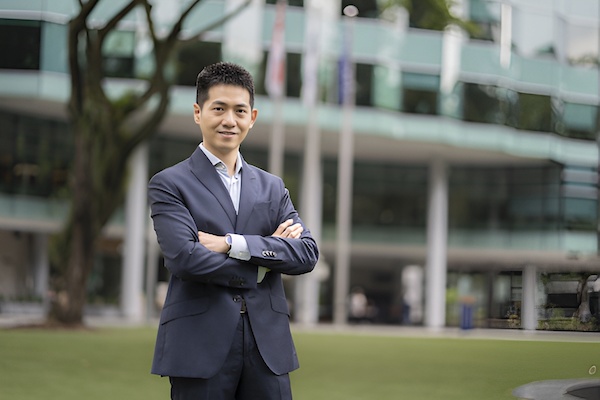
Here is where Singapore Management University’s (SMU) Associate Professor of Operations Management Daniel Zheng comes in.
By combining data pooling with distributionally robust optimisation (DRO) methods, he is working to develop a theoretical framework to address data scarcity and improve decision-making for underrepresented patient subgroups in the ICU and other clinical settings.
“This project aims to provide the first formal characterisation of regret for under-represented patient subgroups in multi-stage clinical decision-making, showing how limited subgroup data amplify estimation error and degrade performance,” he said in his research proposal, “Fair and Robust Decision-Making Under Health Data Poverty: Theory, Algorithms, and Clinical Applications”. The project was awarded a Ministry of Education (MOE) Academic Research Fund (AcRF) Tier 2 grant. Regret refers to the performance gap between a policy learnt from limited data and the true optimal policy.
The project “is also the first to analyse how DRO interacts with data pooling across subgroups, a problem with substantial practical relevance but limited theoretical understanding.”
Professor Zheng added that the resulting framework would be applicable to ICU, post-operative, and chronic disease settings, with broad relevance for healthcare operations and sequential decision-making.
Hand in hand with NUH
Over the three-year project, Professor Zheng will analyse data from the National University Hospital’s (NUH) Cardiothoracic ICU and work with a clinical team from the National University Heart Centre, Singapore (NUHCS), including Dr Ooi Oon Cheong, Dr Chen Jianye, and Dr Luo Haidong.
This partnership grounds the research in clinical reality. “The doctors can verify whether the algorithm findings make sense, whether they’re aligned with their clinical knowledge,” Professor Zheng said in an interview with SMU’s Office of Research Governance and Administration (ORGA). “But it could also be two-way: Sometimes we contribute to their knowledge, where they say, ‘Ah, we overlooked this variable.’”
Their collaboration harks back to a decade ago when NUH approached SMU’s operations management department to look into designing an algorithm to aid extubation decision-making. This culminated in a 2020-23 MOE Tier 2 project led by Professor Zheng, which showed through empirical analysis that incorporating predictions of future patient health states into extubation decisions could reduce both extubation failure rates and ICU length of stay.
It was also through these investigations that they consistently found health data poverty for certain patient groups, such as those of specific age brackets and patients with multiple medical conditions. In the NUH Cardiothoracic ICU dataset, Chinese patients accounted for almost 66 percent of the sample, while Malays and Indians represented approximately 15 percent and 8.5 percent, respectively. These imbalances raise concerns about whether decision-making algorithms developed using limited data can perform equally well across different patient subgroups, particularly when applied to a wider range of ICU treatments. Addressing this challenge is a key motivation for the current project.
A long road to clinical practice
Professor Zheng takes quiet pride in how his research with NUH could result in concrete aid for the medical profession. “It’s very meaningful. This is not a problem that I sit in the office and think about solving. This is a real problem troubling doctors,” he said.
When a life is at stake, difficult ICU decisions can sometimes require prolonged discussion among clinicians. Once, Professor Zheng waited for three hours at NUH for his research partners, who were discussing with several other doctors whether to extubate a particularly complex ICU case. “In the end, they couldn’t reach a consensus and decided to wait another few hours. It happens quite a lot,” said Professor Zheng.
He hopes his models and algorithms can help relieve the stress and difficulty of ICU decision-making. Such a decision-support tool could be particularly useful during night shifts, when junior clinicians may have less immediate access to the experience and expertise of senior specialists.
A quick fix, however, is certainly not in sight, cautioned Professor Zheng. “This is a long-term goal, a long-term tool,” he said. “It’s hard for the algorithm to be implemented right away. I don’t want the wrong model or a poor model to affect the doctor’s judgment, so the algorithm has to be carefully verified and that would take a long time.”
Back to Research@SMU November 2026 Issue
See More News

Want to see more of SMU Research?
Sign up for Research@SMU e-newslettter to know more about our research and research-related events!
If you would like to remove yourself from all our mailing list, please visit https://eservices.smu.edu.sg/internet/DNC/Default.aspx