

By Alistair Jones
SMU Office of Research Governance & Administration – The rapid expansion of digital finance has transformed how households borrow, save and participate in financial markets. One option is Buy Now Pay Later (BNPL), a digitally mediated form of unsecured credit.
BNPL loans are accessed by millions of people, particularly those with liquidity constraints and little or no credit history. Loans are commonly for sums up to $2000, to be paid off in four defined instalments. There is usually no interest on the loans but fees apply if repayments are missed or late, effectively acting as high-cost borrowing.
BNPL services have seamlessly integrated into e-commerce platforms and, according to media reports, about 33 percent of Singaporean adults use them. Banks are increasingly offering pay-later services embedded within their mobile banking apps.
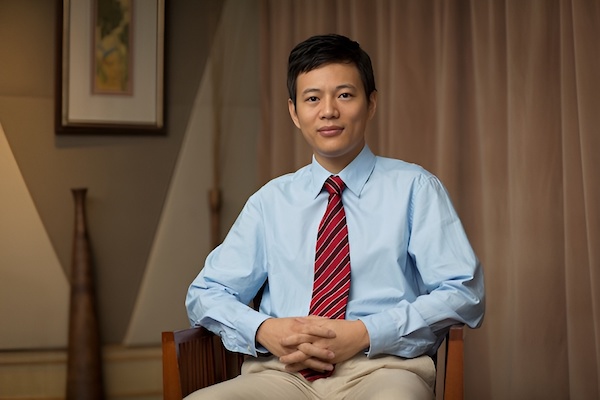
With data drawn from Singapore, Indonesia and South Korea, a research project led by Jianfeng Hu, an Associate Professor of Finance at Singapore Management University (SMU), has been awarded an Academic Research Fund (AcRF) Tier 2 grant from Singapore's Ministry of Education (MOE) to study the economics of financial inclusion.
"The project asks when financial inclusion genuinely improves household welfare, rather than simply expanding access to financial products," Professor Hu says.
"We study this through three questions: whether BNPL helps borrowers move into formal banking, whether credit–savings bundles improve resilience, and what happens when regulators restrict access to risky financial markets.
"Financial inclusion means giving households meaningful access to useful and affordable financial services such as payments, savings, credit and investment products. It has become especially important in emerging markets because digital finance can reach people who were previously underserved by traditional banks, but policymakers increasingly recognise that access alone does not guarantee better outcomes."
Household cash flows
BNPL platforms have gone from a niche product to a global billion-dollar industry. What has fuelled this explosion?
"BNPL is convenient, fast and embedded directly into the purchasing process. It also provides credit to consumers who may have limited access to traditional credit cards, while giving merchants a way to increase customers’ purchasing capacity," Professor Hu says.
"The main risks are over-borrowing, fragmented debt across multiple platforms and repayment schedules that do not match household cash flows. There is also the possibility that borrowers remain dependent on relatively costly alternative credit rather than progressing into mainstream banking."
But BNPL borrowers need some form of bank card – debit or credit – to make repayments digitally. Could this existing connection with banks help facilitate a future formal loan?
"Potentially, but the key issue is whether banks can use the information generated by BNPL repayment histories. One of our questions is whether a good BNPL track record helps borrowers obtain their first formal bank loan, or better loan terms, and whether it contains information beyond conventional credit scores," Professor Hu says.
The researchers see significant gaps in existing studies for understanding how modern digital financial ecosystems shape household outcomes over time.
"Most studies examine credit, savings, literacy or investment participation separately. We know much less about how households move across products over time and whether initial access leads to long-term financial mobility or persistent dependence on costly finance," Professor Hu says.
"We combine three different empirical approaches: administrative credit-registry data, a randomised field experiment, and a natural experiment created by regulation. This allows us to study both inclusion and exclusion with stronger causal identification than simple correlations."
Combined borrowing
Singapore is a leading financial technology (fintech) hub in Southeast Asia, hosting more than 1800 fintech firms that account for a large share of regional funding and investment. The researchers believe their study will be informative for these firms.
"Many Singapore-based fintech firms serve customers across Southeast Asia. Our findings can help them understand whether alternative credit helps customers graduate into better financial products, whether repayment histories improve underwriting, and whether product designs such as credit–savings bundles improve both customer welfare and portfolio quality," Professor Hu says.
And what are credit-savings bundles?
"Credit–savings bundles combine borrowing with a requirement or incentive to save. The idea is that credit can meet immediate liquidity needs while savings provide a buffer against defaults and future shocks, potentially helping households avoid repeated borrowing," Professor Hu says.
"We want to distinguish the effect of the product from the characteristics of people who choose it. Our experiment compares ordinary credit, voluntary bundles, subsidised bundles and mandatory saving, allowing us to separate causal effects from borrower self-selection."
To study financial exclusion, the research team turned to a 2012 regulation in Korea that aimed to deliberately sideline small retail investors, viewed as speculative and loss-prone, by introducing a fivefold increase in the KOSPI 200 index option contract multiplier.
"We can examine whether restricting access actually protected small investors from losses, which investors were pushed out, and whether removing retail participation improved or worsened market liquidity and price efficiency," Professor Hu says.
Meaningful inclusion
And then there's Indonesia, a complex consumer market. The researchers see the Indonesian setting as a rare opportunity to credibly measure both sides of the BNPL debate.
"Indonesia combines rapid BNPL growth with a large population that still has limited access to conventional bank credit. By linking BNPL records with credit-bureau and formal bank-loan data, we can test whether BNPL acts as a ladder into mainstream finance or leaves borrowers included but trapped in alternative credit," Professor Hu says.
Recently, the Indonesian government announced a plan to provide every citizen aged 17 and older with a bank account. Could this be mandatory financial inclusion?
"I would describe it more as universal financial access than mandatory inclusion," Professor Hu says. "Providing an account creates the infrastructure for inclusion, but meaningful inclusion depends on whether people actually use financial services in ways that improve their financial wellbeing."
Surely the initiative will require a massive financial literacy campaign?
"Financial literacy can help, but it is only one part of the solution. Products also need to be simple, trustworthy, accessible and well matched to users who may have little prior experience with formal finance," Professor Hu says.
"Financial literacy and product design should be viewed as complements. We should not rely on consumers alone to make perfect decisions; financial products should also be designed to work well given real-world limitations in attention, experience and self-control."
Back to Research@SMU November 2026 Issue
See More News
Want to see more of SMU Research?
Sign up for Research@SMU e-newslettter to know more about our research and research-related events!
If you would like to remove yourself from all our mailing list, please visit https://eservices.smu.edu.sg/internet/DNC/Default.aspx