

By Alistair Jones
SMU Office of Research Governance & Administration – Buy, hold or sell. These are choices that sell-side analysts at investment banks consider for their clients as they evaluate publicly traded companies, issue financial research, make earnings forecasts and rate stocks.
The role dates back to the 1930s, with origins in the discreet advice of company bookkeepers. Since then, through recessions, scandals and adaptation to regulation, sell-side analysis has evolved into an influential global industry. Its present iteration can include the tools of AI.
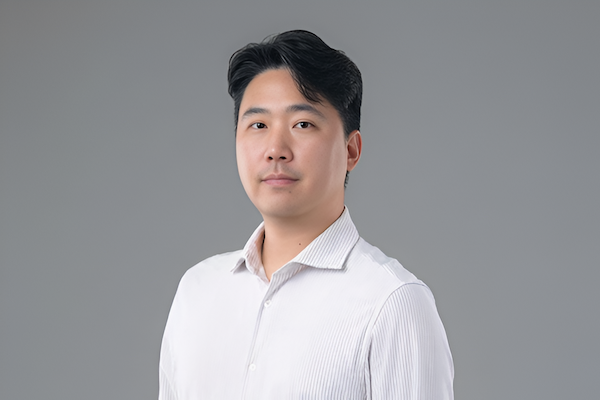
A new study, co-authored by Il Sun Yoo, an Assistant Professor of Accounting at Singapore Management University (SMU), examines how investments in AI made by investment banks are associated with subsequent sell-side analyst performance and behaviour, focusing on analysts’ information acquisition and processing.
"One of my research interests is understanding the roles and behaviour of information intermediaries, such as financial analysts," says Professor Yoo, who wrote the paper Beyond Automation: AI and the Human Value of Sell-Side Analysts with Devin Shanthikumar at the University of California, Irvine.
"AI has grown significantly in recent years and the financial industry was among the early adopters, making investments in AI beginning in the 2010s. This led us to wonder how AI might affect the way financial analysts work and behave.
"Our study is important because financial analysts play a critical role in intermediating and providing information in stock markets. Given the rapid adoption of AI in the financial industry, it is important to understand how AI affects the work and behaviour of these information intermediaries. Our research contributes to this understanding by showing that AI may reshape the role and value of information intermediaries."
Deeper insights
The researchers provide a two-step framework for understanding how analysts may use AI.
"In the first step, AI helps automate the processing of public information, such as firm filings and earnings conference call transcripts, thereby saving analysts time," Professor Yoo says.
"In the second step, we examine whether analysts reallocate the time freed up by such automation to more value-added activities that AI cannot fully automate, such as acquiring and incorporating additional private information."
For their study, the researchers selected large and mid-sized banks with AI investments indicated by their AI-related job postings. This seemingly novel method for discerning AI investment has been developed and validated by prior research.
"In general, an organisation’s human capital investment is an important part of AI investment. For example, AI experts are necessary to build AI resources within the organisation, making it an effective measure of AI investment within the organisation," Professor Yoo says.
"I think one unique feature of our study is that we conducted interviews with 18 financial analysts to gain deeper insights into how AI is actually used in their work. These interviews significantly helped us develop our conceptual framework and interpret our empirical findings."
Interviewees consistently described AI tools as improving the efficiency of public information extraction and analysis. They also consistently described reallocating time saved from AI-assisted information processing toward higher-value research activities.
Every interviewee had their own way of digging more deeply into firms, leveraging their individual strengths, expertise and research philosophy. As one interviewee put it: “[AI] gives the analysts the ability to spend time on the art, not just the science.”
Human expertise
The researchers find that sell-side analysis from firms with AI investments is associated with higher quality and bolder earnings forecasts, particularly when private information is more important and accessible to analysts.
"[And] we find that analysts with greater access to AI resources update their forecasts more quickly after new information, such as firm filings, becomes available," Professor Yoo says
But are there negative impacts?
"There are always both bright and dark sides to new technologies. One particularly important question is how AI may affect hiring and employment in the longer term. While AI can complement existing analysts by helping them work more efficiently, it may also change the demand for analysts and the types of skills that employers seek," Professor Yoo says.
"Overall, our findings suggest that AI can complement human expertise by allowing people to devote more time and effort to activities where human input is particularly valuable.
"I believe that the ability to interpret information and make judgments is a distinctive human value that is less likely to be fully automated. The same information can lead to different interpretations, and humans can draw on their own experience and expertise to make judgments while considering the nuances and context of a particular situation.
"AI can certainly help with this process, but subtle judgments that require contextual understanding, experience, and professional expertise are areas where human input remains particularly important."
New opportunities
Future AI may differ in unpredictable ways, but the researchers expect that human analysts will continue to have incentives to differentiate themselves in a future AI era. Would this be more than just a desire to keep their jobs?
"Certainly, the desire to remain valuable in the workplace will be an important factor motivating analysts to differentiate themselves from what AI can provide," Professor Yoo says.
"But I think the incentives go beyond simply keeping their jobs. In the past, analysts may have had ideas or activities they wanted to pursue but could not because of limited time and resources. By automating time-consuming tasks and making more resources readily available, AI can free analysts to pursue activities that were previously too costly or time-intensive.
"This may encourage them to try new approaches, develop deeper expertise, acquire unique information, or provide insights that go beyond what AI alone can generate. In this sense, AI may not only create pressure for analysts to differentiate themselves, but also give them new opportunities to do so."
And could the researchers' findings have wider usage?
"I believe our framework can apply to many other industries, particularly those involving knowledge and thought intensive work. I can even see it applying to my own work in research and teaching," Professor Yoo says.
"AI can automate certain tasks while freeing people to devote more time to higher-value activities that rely on human expertise, creativity and judgment."
Back to Research@SMU November 2026 Issue
See More News


Want to see more of SMU Research?
Sign up for Research@SMU e-newslettter to know more about our research and research-related events!
If you would like to remove yourself from all our mailing list, please visit https://eservices.smu.edu.sg/internet/DNC/Default.aspx