

By Vince Chong
SMU Office of Research Governance & Administration – Governments often use taxpayer‑funded subsidies to attract big companies, but large incentives spur backlash at times when job and investment benefits bypass the struggling middle class, for instance, or divert money away from essentials like education.
However, a new research project by a SMU accounting don showed that there is more to such incentives than the number of new jobs or the amount of fiscal return corporations can bring to the table. The result was “Megadeal” Subsidies, Local Spillovers, and Corporate Innovation, which underscored how large subsidies generate “geographic innovation spillovers”.
Innovation refers generally to the invention and introduction of new or improved products and processes. Based on at least one globally acknowledged definition, it is “the ultimate driver of long-term productivity growth and better living standards because it expands the frontier of what is possible for society.”
As the research report concluded, there is “policy-relevant evidence that place-based, firm-specific corporate subsidies yield knowledge spillovers onto local firms that ultimately generate local innovation.” This was especially true when incentives were awarded to “laboratories, corporate headquarters and high-tech manufacturing plants”.
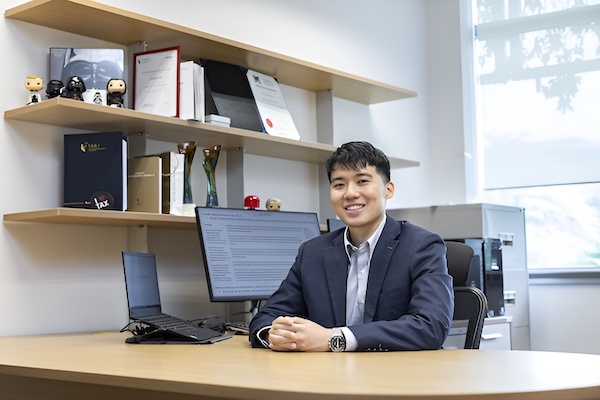
That said, it was the initial controversy surrounding the topic that sparked Assistant Professor of Accounting Shaphan Ng’s interest in the research.
“As a tax researcher, I am very interested in examining the effectiveness of tax policies and their impact on the local economy,” he told the Office of Research Governance and Administration (ORGA), noting that similar research in the past appeared to have overlooked innovation as a “vital long-run contributor to economic growth”.
“I wanted to contribute to the policy debate by offering a different perspective on the effects of these tax subsidies.”
Examples of megadeals that have received widespread attention include Taiwanese company Foxconn’s multi-billion-dollar plans in Wisconsin – there was “controversy surrounding the feasibility of the plan and the sheer size of the payout coming from tax dollars” – and U.S. tech company Tesla’s US$5 billion battery factory investment in Nevada, which “Megadeal” Subsidies noted was slammed by local media for costing the state’s school system billions in lost tax revenues.
“Megadeal” Subsidies was co-authored by Associate Professor Yoojin Lee, California State University, Long Beach, U.S, and Assistant Professor Aruhn Venkat, University of California, Riverside, U.S.
Globally relevant
The study focused on corporate subsidies in excess of US$50 million in the U.S., where it was based mainly for empirical purposes. This included easy accessibility to “rich” data on state subsidies and patents, as well as uniform institutional and legal standards that would not be possible across different countries. As it noted, innovation was one of the key drivers of 20th century development in the U.S., with the fastest-growing states also the ones with the highest levels of innovation.
Such findings however are not exclusive to the U.S., Professor Ng noted, with innovation spillover effects uncovered by his research matching the results of similar policies worldwide, including Singapore. It is not unreasonable, he added, that some of these might apply elsewhere as well.
For example, as the study found, a one-standard-deviation rise in a megadeal's subsidy amount was linked roughly to an increase of between 3.3% to 4.9% in the number of patents among local firms. This breaks down to about two to three patents per annum in the first five years following the subsidy. In places with more local firms, the number of patents was estimated to rise to between six and nine per year.
One standard deviation typically measures the distance a data point lies from the average mean, while patenting – as a legal framework aimed at protecting inventions – is often used to gauge innovation levels.
“Specifically, we found that the innovation effects are concentrated in megadeals awarded to R&D laboratories, corporate headquarters, and high-tech manufacturing plants,” said Professor Ng, whose research also showed corporate subsidy recipients bringing new knowledge to its immediate surroundings through the hiring of new staff. For example, Tesla’s investment in Nevada saw it post job openings for not just manufacturing project managers and engineers, but also a translator for engineers from Japan.
Likewise, the academic continued, Singapore’s Economic Development Board (EDB) has through various incentive programmes attracted global innovation leaders such as Johnson & Johnson International and Flagship Pioneering “to establish their regional headquarters, R&D centres, and manufacturing operations in Singapore, creating opportunities for these firms to collaborate with local companies.”
The study also found that innovation spillovers are significantly stronger in regions with a strong university presence, as close collaboration between firms and top-tier researchers typically facilitate broad knowledge spillovers to the economy.
This is again relevant to a research ecosystem like Singapore’s, said Professor Ng, “where universities such as National University of Singapore, Nanyang Technological University, Singapore University of Technology and Design, work with institutes like A*STAR [Agency for Science, Technology and Research] and industry partners to facilitate knowledge sharing and creation.”
Future research
Going forward, the researcher and his collaborators are “definitely open” to transplanting a similar study in Singapore and the region. He cited a 2025 study by Singapore’s Ministry of Trade and Industry (MTI) that he hopes to follow up on. Based on that report, local firms linked to EDB-supported companies exhibited better value-add per worker, while contributing to high local employment and wages.
“We hope to complement the MTI study by examining whether local firms linked to EDB-supported companies also innovate more, thus offering a fuller picture of the positive economic spillovers generated by EDB programmes,” Professor Ng said, adding that the focus in Singapore seems to have shifted from mere job quantity, to the quality of opportunities that can be created.
“Increasing innovation through corporate subsidies can, in turn, contribute to higher productivity, wage growth, and the creation of new industries and high-quality jobs,” he said.
“We hope that our research can contribute to a broader policy discussion with local policymakers and stakeholders.”
Back to Research@SMU November 2026 Issue
See More News


Want to see more of SMU Research?
Sign up for Research@SMU e-newslettter to know more about our research and research-related events!
If you would like to remove yourself from all our mailing list, please visit https://eservices.smu.edu.sg/internet/DNC/Default.aspx